




 This morning the Supreme Court will hear Trump v. Cook, a case that began with an unprecedented move: President Trump fired Federal Reserve Governor Lisa Cook. As usual, lower courts blocked him.
The press is framing this as a fight about “central bank independence” and even inflation fears. But that deliberately misses the real question at stake:
Do we still have a Constitution, or do we have a permanent ruling class — credentialed, insulated, and effectively unfireable — running the country while elections serve as a ceremonial change of figureheads?
Trump v. Cook is not an isolated dispute. It is the Federal Reserve chapter in the same story the Court already confronted last month in Trump v. Slaughter, the FTC case that squarely asks the Supreme Court to admit what has been obvious since 1935: Humphrey’s Executor was a constitutional disaster.
Simply put, today’s argument is about whether the Supreme Court will continue to bless an unconstitutional fourth branch of government, run by “experts,” insulated from the voters, and wielding coercive power without democratic accountability.
Or to put that another way, does the Constitution’s Article 2, Section 1 have any meaning?
This morning the Supreme Court will hear Trump v. Cook, a case that began with an unprecedented move: President Trump fired Federal Reserve Governor Lisa Cook. As usual, lower courts blocked him.
The press is framing this as a fight about “central bank independence” and even inflation fears. But that deliberately misses the real question at stake:
Do we still have a Constitution, or do we have a permanent ruling class — credentialed, insulated, and effectively unfireable — running the country while elections serve as a ceremonial change of figureheads?
Trump v. Cook is not an isolated dispute. It is the Federal Reserve chapter in the same story the Court already confronted last month in Trump v. Slaughter, the FTC case that squarely asks the Supreme Court to admit what has been obvious since 1935: Humphrey’s Executor was a constitutional disaster.
Simply put, today’s argument is about whether the Supreme Court will continue to bless an unconstitutional fourth branch of government, run by “experts,” insulated from the voters, and wielding coercive power without democratic accountability.
Or to put that another way, does the Constitution’s Article 2, Section 1 have any meaning? 

 The Tides Foundation rarely appears prominently in public debate, yet it occupies a critical position in modern American civic life.
It is not a political party, a campaign committee, or a government agency. It does not pass laws, issue rulings, or command police forces.
And yet, through its structure, it exerts influence over how laws are enforced, how public norms are shaped, and how activism is sustained.
This essay is not an accusation of illegality. It is an examination of architecture, the legal and institutional design that allows power to be exercised without visibility, responsibility, or direct democratic consent.
The name Tides itself was chosen deliberately.
It reflects a view of social change not as something achieved through elections, legislation, or singular moments, but as something that advances through cumulative, distributed pressure over time.
A tide is slow. It is not dramatic. It does not announce itself as an act of will.
It reshapes the shoreline through persistence, not force, and it is difficult to attribute any specific change to a single wave or actor.
That metaphor captures the organization’s founding philosophy: Durable change emerges from many aligned actions, operating across institutions, advancing steadily, and appearing natural even when driven by distant causes.
The Tides Foundation rarely appears prominently in public debate, yet it occupies a critical position in modern American civic life.
It is not a political party, a campaign committee, or a government agency. It does not pass laws, issue rulings, or command police forces.
And yet, through its structure, it exerts influence over how laws are enforced, how public norms are shaped, and how activism is sustained.
This essay is not an accusation of illegality. It is an examination of architecture, the legal and institutional design that allows power to be exercised without visibility, responsibility, or direct democratic consent.
The name Tides itself was chosen deliberately.
It reflects a view of social change not as something achieved through elections, legislation, or singular moments, but as something that advances through cumulative, distributed pressure over time.
A tide is slow. It is not dramatic. It does not announce itself as an act of will.
It reshapes the shoreline through persistence, not force, and it is difficult to attribute any specific change to a single wave or actor.
That metaphor captures the organization’s founding philosophy: Durable change emerges from many aligned actions, operating across institutions, advancing steadily, and appearing natural even when driven by distant causes. 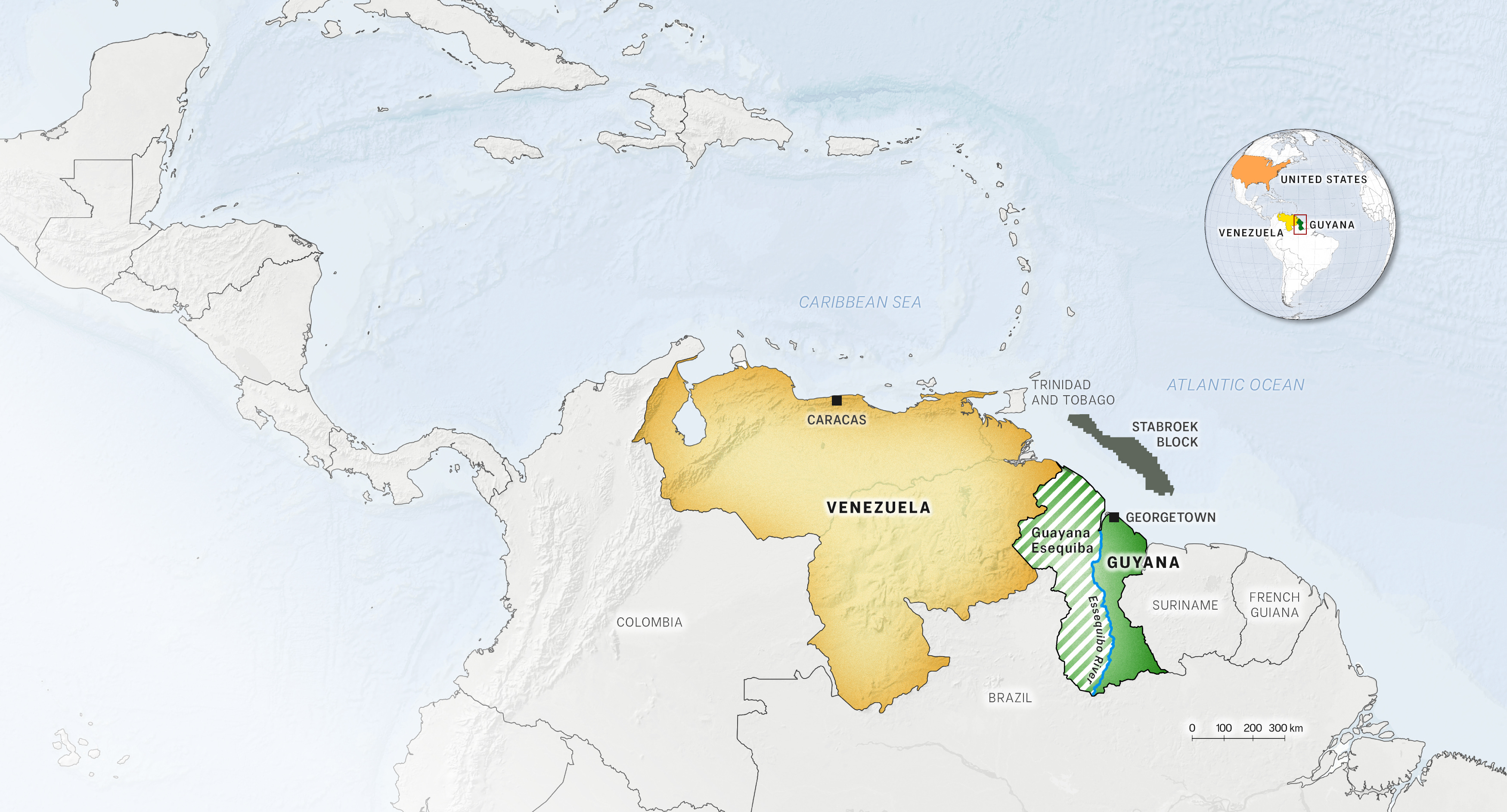 With the U.S. capture of Venezuelan strongman Nicolás Maduro in a bold Jan. 3 military raid and a large naval force still prowling the southern Caribbean to ensure that Maduro’s successors cooperate with the Trump administration, other subtle, but key, developments in the region can be overlooked.
Among under-the-wire events is a December 2025 agreement between the United States and Venezuela’s neighbor, Guyana.
That agreement could have profound implications, not only in the immediate context of unfolding events in Venezuela, but also for the long-term execution of the Trump Corollary to the Monroe Doctrine,
With the U.S. capture of Venezuelan strongman Nicolás Maduro in a bold Jan. 3 military raid and a large naval force still prowling the southern Caribbean to ensure that Maduro’s successors cooperate with the Trump administration, other subtle, but key, developments in the region can be overlooked.
Among under-the-wire events is a December 2025 agreement between the United States and Venezuela’s neighbor, Guyana.
That agreement could have profound implications, not only in the immediate context of unfolding events in Venezuela, but also for the long-term execution of the Trump Corollary to the Monroe Doctrine, THE TYRANNY OF CHINA’S HISTORY
[This Monday’s archive was originally published on December 1, 2004 – While the news is fixated on Europe and the Middle East these days, China is always the threat looming in the background. The old saying comes to mind: The more things change, the more they stay the same. This is peculiarly true for China.]
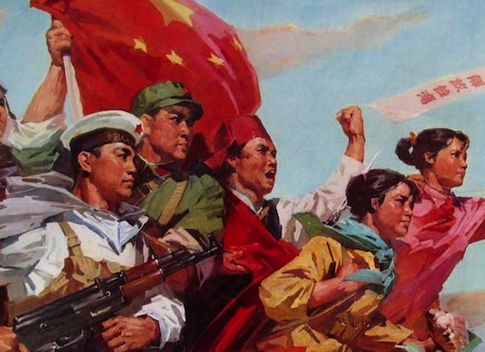 Chinese, written and spoken, is my candidate for the weirdest major language on earth. At the Monterey Institute, where US diplomats are taught foreign languages, it takes on average 600 hours of instruction to be fluent in a European language such as French or German, 1200 for Arabic - and 2400 in Chinese. (This means, of course, that for China and the world to communicate, Chinese must speak English, as the world will never speak Chinese).
Beyond the technical difficulties lie far deeper problems, resulting in a grossly myopic view of China’s history and future. The one buried most deeply is the way Chinese grammar reverses time: the past, in Chinese, is in front of or before you, while the future is behind you. Chinese culture is oriented towards the past, reading Chinese history through a distorted lens, and stubbornly attempting to apply illusory lessons to the present.
This is precisely what China’s military and government leaders are doing with their strategy towards America.

 [As you know, Durk and Sandy have passed on. Durk as “Skye” was beloved on TTP. We are preserving his and Sandy’s legacy through these “Live Long and Prosper” TTP columns. —Greg and Michelle Pryor of Life Priority]

 “All we really needed was a new president,” Donald Trump